The Roman College and the birth of global education
The creation of an educational network as early as the sixteenth century and its relevance today
A global center of knowledge in the heart of Rome
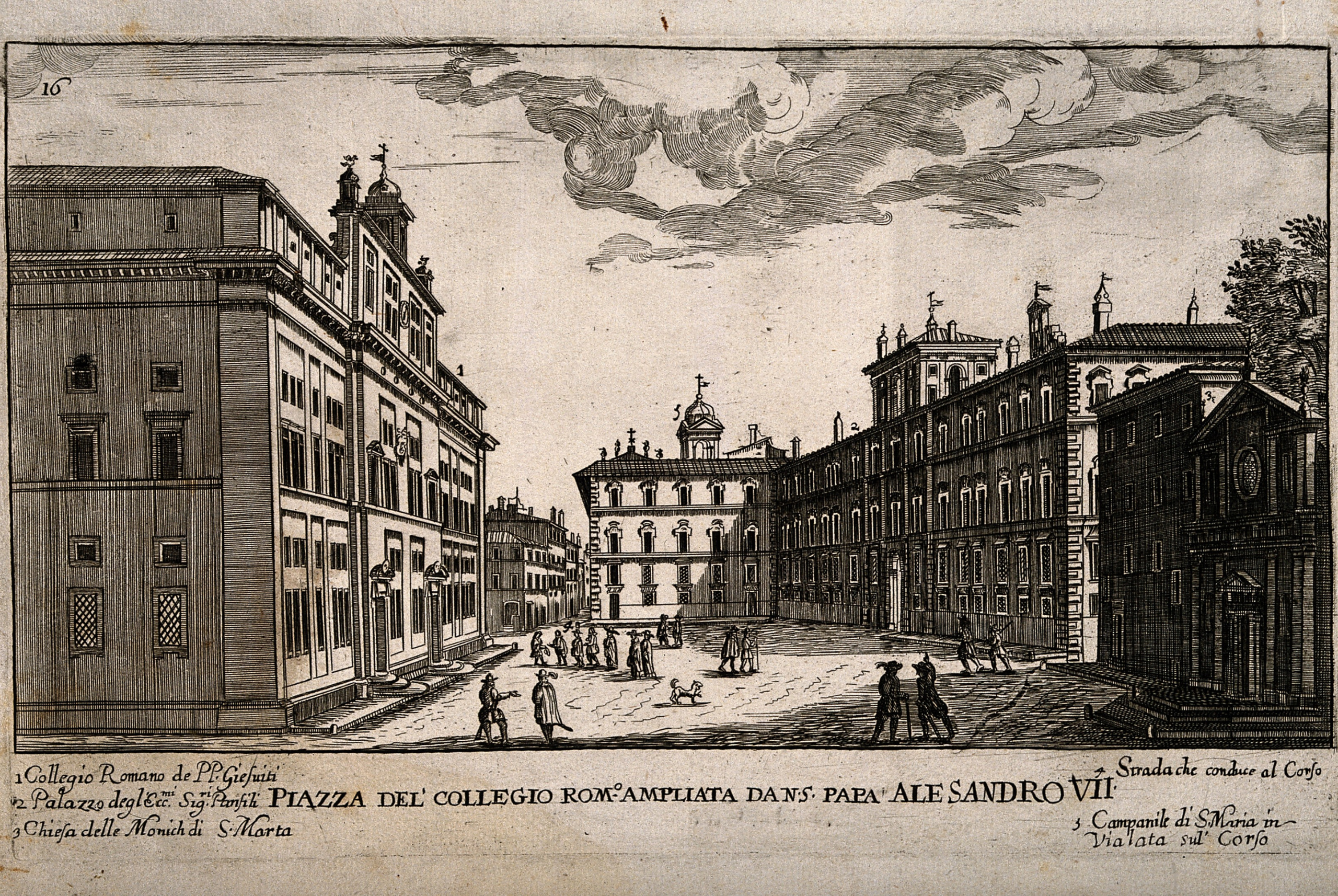
In 1551, Saint Ignatius of Loyola, founder of the Society of Jesus, inaugurated in Rome a new idea of education: the Roman College, a school open to young people eager to study, without distinctions. Within a few years, thanks to the Jesuits’ educational vision and the support of influential figures such as Francis Borgia, it became one of the most important intellectual centers of early modern Europe. Here, not only classical disciplines were taught, but a form of integrated education was developed, capable of uniting faith, culture, and social responsibility.
The College attracted students and scholars from different regions of Europe, giving rise to an early model of international educational interconnection. This project anticipated by centuries what we now call global networking, understood as the ability to create connections, exchanges, and lasting relationships between individuals and institutions.
Within a few years, alongside the study of Latin, Greek, and Hebrew, courses in philosophy, theology, and other disciplines were introduced, making the Roman College a true model of integral education.
Thinking globally before the modern concept of globalization
The strength of the Roman College did not lie only in the quality of its teaching, but in the network of relationships it built from the very beginning. The Jesuits did not conceive education as an isolated experience, but as a project destined to cross geographical and cultural boundaries.
This network was made possible also by the presence of scholars of different nationalities and by the mobility of students and teachers. In a short time, the Roman College helped animate a dense educational network extending from Italy to the rest of Europe, anticipating forms of collaboration and exchange that are central in today’s educational world.
Over time, this vision has developed into the Jesuit Global Network of Schools (JGNS), which today connects thousands of schools across different continents with the aim of sharing mission, values, and educational practices. The network includes not only secondary and pre secondary schools, but also initiatives of popular education such as Fe y Alegría and institutions dedicated to the education of refugees.
Since its official launch in 2021, the JGNS has been conceived not as a simple aggregation of institutions, but as a living organism capable of fostering collaboration, dialogue, and exchange among educators and students from different cultures.
The Ratio Studiorum: a shared educational vision
A fundamental element of this global education was the development of the Ratio Studiorum, the document that in 1599 codified the Jesuit educational system. Drafted also thanks to the contribution of scholars from the Roman College, the Ratio was not simply a list of subjects, but a shared pedagogical vision adopted by schools across many parts of the world.
This educational model did not limit itself to the transmission of knowledge, but aimed to form individuals capable of discernment, of relating to others, and of acting responsibly. In this sense, it anticipated the modern concept of educational leadership, based not only on disciplinary competence, but on the ability to build relationships and generate social and cultural impact.
Within the global network, this leadership is still expressed today through the possibility for schools and educators to share methodologies and practices, developing a common educational outlook that transcends geographical boundaries while remaining rooted in local contexts.
The College as a place of international dialogue
Education at the Roman College was not only about transmitting knowledge, but also about forming students in communication and dialogue. Students learned to engage with different ideas, to interpret complex texts, and to discuss and argue with rigor, developing skills that fostered the emergence of intellectual and cultural networks across countries.
Figures such as the mathematician Christoph Clavius, who taught at the College for decades and whose works were translated and used even in Asia, show how the Roman College was far more than a local campus: it was a platform for the global dissemination of scientific and humanistic knowledge.
This openness is reflected today in the global communication practices of Jesuit schools. Educational networks are not isolated, but interconnected through digital platforms and ongoing initiatives for exchange. The Educate Magis community, for example, connects Jesuit educators worldwide, promoting the sharing of resources, reflections, and educational experiences.
This form of communication is not merely technical, but deeply cultural, as it enables the listening to diverse perspectives and the construction of shared responses to contemporary educational challenges.
The legacy today: networking, leadership, and communication
The Jesuit idea of education was never limited to forming scholars, but aimed at forming individuals capable of critical thinking, dialogue, leadership, and building connections across cultures. In this sense, the Roman College represents one of the earliest examples of a school capable of thinking globally, long before the concept of globalization became widespread.
Today, in the era of digital networks and global communication, this educational vision shows its full relevance. Skills such as the ability to build lasting connections, understand different cultural contexts, and communicate effectively have their roots in this educational project born in the sixteenth century.
Conclusion
The Roman College was founded on an ambitious vision: to offer quality education to young people from diverse backgrounds in an open, structured, and interconnected way. That model quickly spread, giving rise to relationships, cultural exchanges, and educational networks capable of transcending political and linguistic boundaries.
Revisiting this historical experience today means recognizing that already in the sixteenth century a true global network of education was being built, capable of connecting people, ideas, and cultures in a shared project that continues to speak to the present.
Share