A School Where There Is Room for Everyone: The Educational Value of Differences
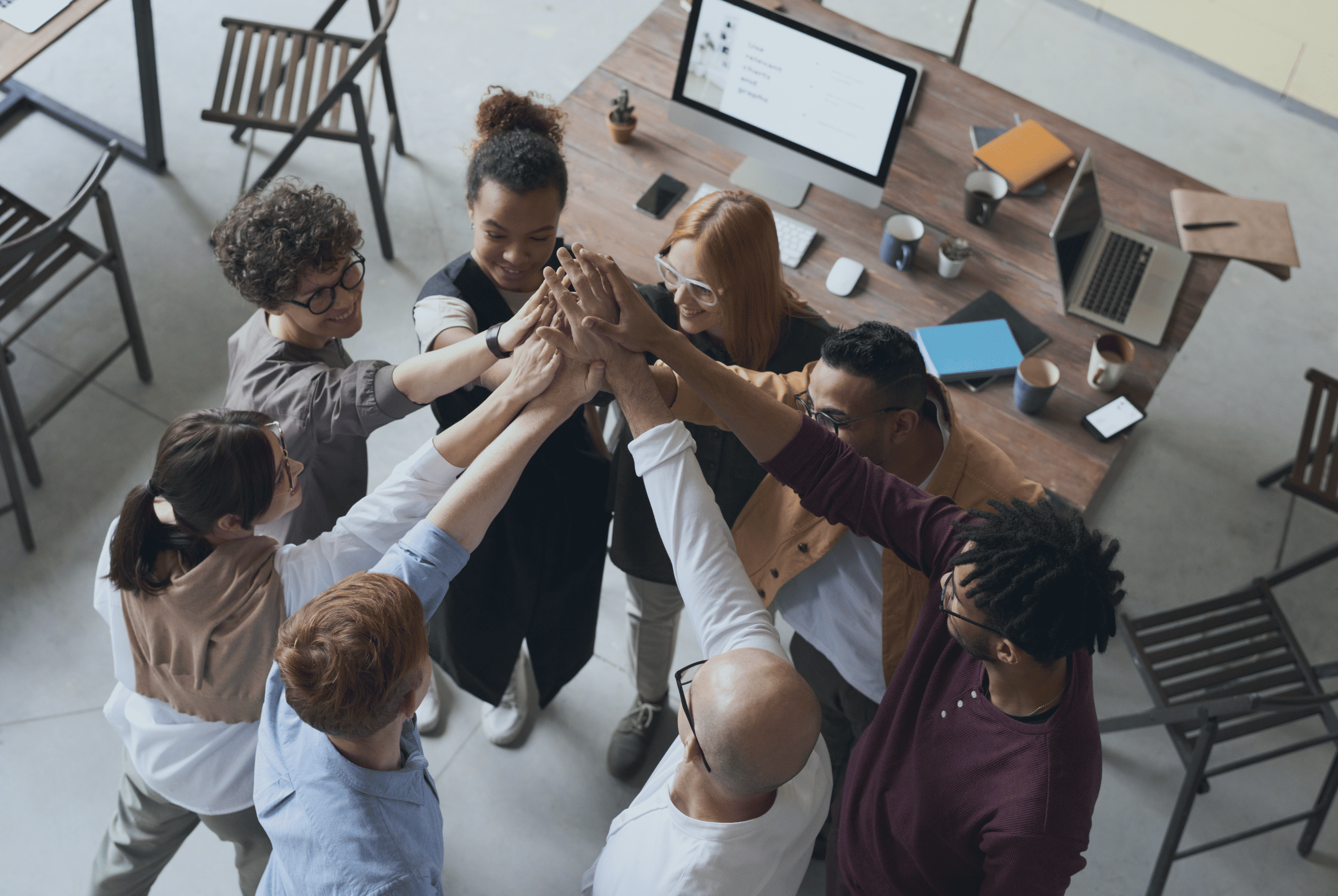
Every classroom is made up of differences. Differences in abilities, personality, personal history, background, culture, interests, ways of communicating, and different ways and paces of learning. Some are immediately visible, while others emerge only over time. No student enters school in exactly the same way as another, and no journey of growth follows exactly the same rhythm.
Yet for a long time, school was imagined mainly according to a common model: the same pace, the same objectives, the same tools, the same ways of demonstrating what had been learned. Differences therefore risked appearing as something to be corrected, compensated for, or simply managed.
Today, we can ask a different question: what happens to an educational community when it learns to see differences not as a problem, but as a resource?
UNESCO has long encouraged education systems to recognize student diversity as a source of richness, emphasizing that a truly inclusive school does not simply ask people to adapt to structures that have already been defined, but is willing to question and transform the way it teaches so that everyone can participate and develop their potential.
There Is No Single Way to Grow
Recognizing differences means, first of all, accepting that there is no single path that is valid for everyone. Some people understand more easily through words, others through experience; some need more time before expressing themselves, while others immediately find their place; some students learn certain subjects quickly and encounter greater difficulty with others. Some bring different languages, cultures, and family histories with them, while others experience vulnerabilities that are not always immediately visible.
Taking this plurality into account does not mean lowering expectations. It means asking how we can enable each person to reach their potential without expecting everyone to do so in the same way.
This perspective is closely connected to cura personalis, one of the characteristic elements of the Ignatian educational tradition. The starting point of the educational process is the concrete reality of the student: their story, family and cultural context, abilities, difficulties, and particular way of engaging with learning. The Ignatian method itself identifies “context” as the starting point for attention to each person in their uniqueness and for personalized, meaningful learning.
Placing the person at the centre therefore means avoiding the tendency to immediately see difference as a gap that needs to be closed in relation to an ideal model. It means starting from a different question: what does this person need in order to grow?
When Difference Changes Others Too
There is, however, an even more interesting aspect. Differences do not concern only the person who is considered “different”. They also transform the community that learns to welcome them.
A classroom in which different abilities, cultures, sensitivities, and ways of learning coexist requires everyone, at least to some extent, to move beyond their own perspective. It asks us to learn that what is easy for one person may be difficult for another, that the same experience can be interpreted in different ways, and that not everyone needs the same things in order to feel part of a community.
In this sense, diversity becomes an educational experience in itself. It can teach us to wait, collaborate, ask for help, adapt the way we communicate, and recognize talents that do not necessarily coincide with those traditionally rewarded at school. It can help students understand that equity does not necessarily mean offering everyone exactly the same thing, but creating the conditions for each person to participate fully.
A community changes when it stops asking only “how can we include this person?” and begins to ask “what can we learn from their presence?”
This is an important shift because it moves the focus from simple inclusion to reciprocity. There is no longer someone who grants space and someone else who must be welcomed. There are different people who, precisely through encounter, contribute to transforming the way the community lives and understands itself.
A School Capable of Seeing the Person
Ignatian pedagogy seeks to combine academic excellence with human excellence, forming students who are not only well prepared in terms of knowledge, but are also capable of service, critical thinking, compassion, and responsibility. The profile of the Ignatian student promoted by Fondazione Gesuiti Educazione reflects precisely this understanding of competence as something that cannot be separated from the overall growth of the person.
This also means recognizing that the quality of a school cannot be measured solely by its ability to lead everyone towards the same result. It can also be seen in its ability to recognize each person, offer genuine opportunities for participation, and allow differences to find their place without turning them into labels.
This does not mean ignoring difficulties. Some differences require specific tools, professional expertise, adaptations, and highly demanding educational work. But even in these cases, a person cannot be reduced to the needs they present. A student is not defined by a diagnosis, a language difficulty, a particular pace of learning, or a vulnerability. Every person brings together needs, abilities, desires, and possibilities.
The Guidelines of Fondazione Gesuiti Educazione were developed precisely with the aim of translating Ignatian identity into the different dimensions of school life, beginning with an educational vision capable of responding to the needs of the present.
A school where there is room for everyone, therefore, is not simply a school where no one is excluded. It is a community in which each person can feel that their presence has value and that they do not need to become identical to others in order to belong.
Perhaps this is the most important transformation that differences can generate: reminding us that a community does not become stronger when everyone learns to be the same, but when it succeeds in building something shared without erasing what makes each person unique.
Making room for differences, then, means much more than welcoming others. It means allowing the presence of another person to broaden the way we see, learn, and live together.
Share