The voice of those who have no voice: the legacy of Oscar Romero and martyrdom for truth
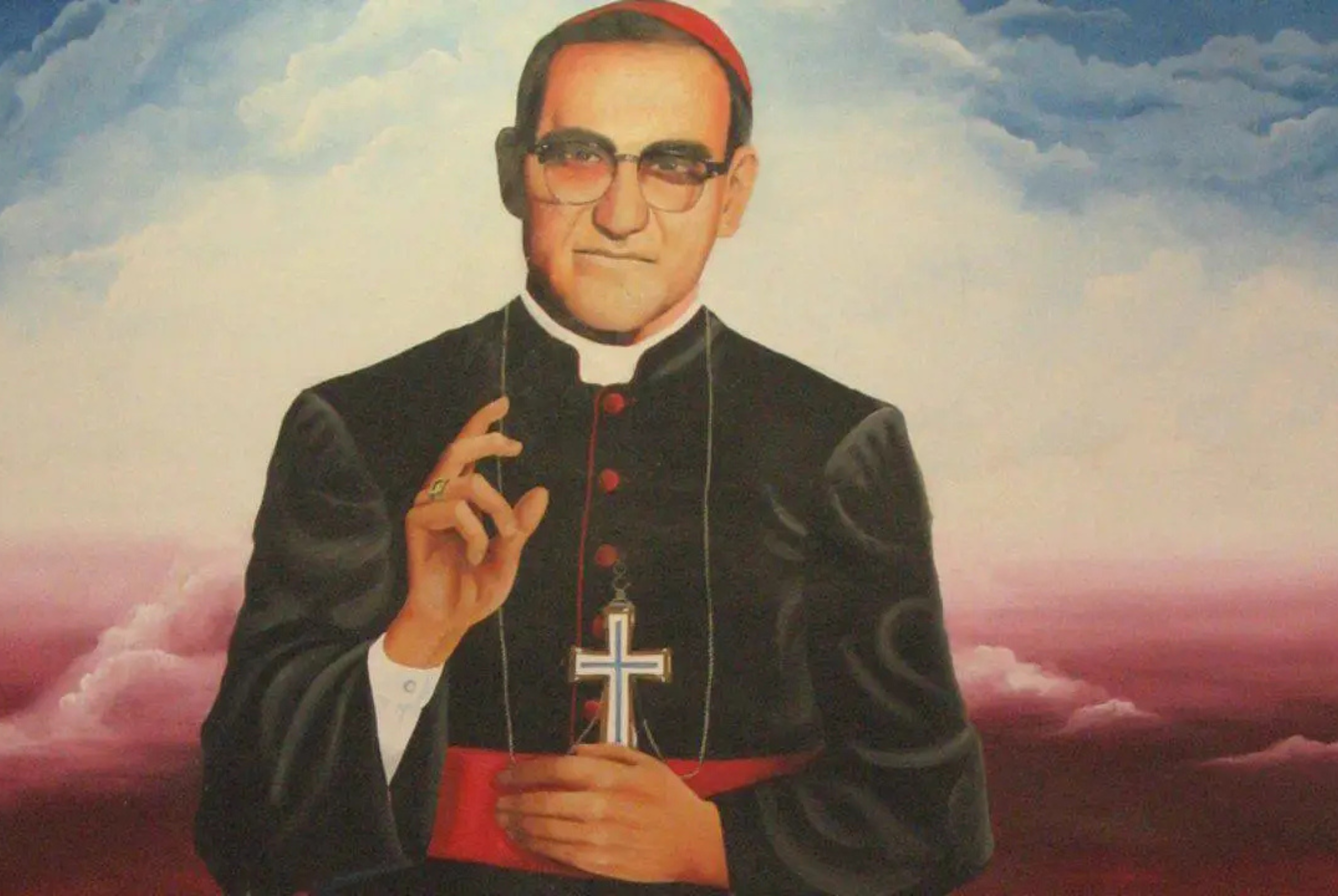
On March 24, 1980, during the celebration of the Eucharist in the chapel of the Hospital of Divine Providence in San Salvador, Archbishop Óscar Arnulfo Romero was assassinated by a gunshot. His martyrdom, officially recognized by the Church with his beatification in 2015 and canonization in 2018, represents one of the most significant chapters in twentieth-century Church history.
The figure of Saint Óscar Romero continues to challenge the conscience of the Church and the world, because his episcopal ministry was marked by a clear choice: to give voice to those who had no voice, to defend human dignity in a context shaped by systematic violence, repression, and social inequality.
A context of conflict and injustice
During the 1970s, El Salvador was marked by profound political and social instability. Widespread poverty, military repression, and violations of human rights affected the daily life of large segments of the population. In this scenario, the Church was confronted with the question of its role in the face of injustice.
Appointed archbishop in 1977, Romero was initially perceived as a prudent and moderate figure. However, the assassination of Father Rutilio Grande, a Jesuit and his close collaborator, marked a turning point. From that moment on, his preaching became increasingly explicit in denouncing violence and defending the poor and the oppressed.
The word as responsibility
Romero’s homilies, broadcast by radio, became a public space of denunciation and hope. In them, he united the proclamation of the Gospel with a careful reading of social reality, showing that faith could not be separated from justice.
His voice was not ideological, but pastoral. Romero spoke as a bishop, fully aware of the responsibility to safeguard the life and dignity of the people entrusted to his care. In a passage that became emblematic, addressing members of the armed forces, he declared: “In the name of God, I beg you, I implore you, I order you: stop the repression.”
Martyrdom for truth
On March 24, 1980, his assassination tragically sealed the coherence between word and life. Romero did not seek conflict, yet he did not renounce speaking the truth. His martyrdom was not the result of an isolated gesture, but the culmination of a ministry lived in fidelity to the Gospel and in the defense of human rights.
The Church has recognized him as a martyr “in hatred of the faith,” because his denunciation of injustice sprang from a profound evangelical conviction: every person bears an inviolable dignity.
A witness that educates to responsibility
The figure of Saint Óscar Romero does not belong only to the history of the Latin American Church, but continues to serve as a reference point for those who reflect on the relationship between faith, justice, and civic responsibility. His ministry shows how the word, when born from a formed and free conscience, can become a space of protection and defense of what is human.
In the educational field, his witness recalls the importance of forming individuals capable of taking a stand in the face of injustice, without yielding to indifference or ideological simplification. In his experience, the search for truth was never abstract; it took concrete shape in listening to victims, attentiveness to real contexts, and coherence between convictions and choices.
The memory of Romero suggests a formative style that helps unite critical awareness and social responsibility, interior depth and attentiveness to reality. His life reminds us that to educate also means accompanying others toward a responsible use of the word, so that it may become an instrument of justice, dialogue, and the building of the common good.
Share