The Tradition of Nativity Scenes Origins and History
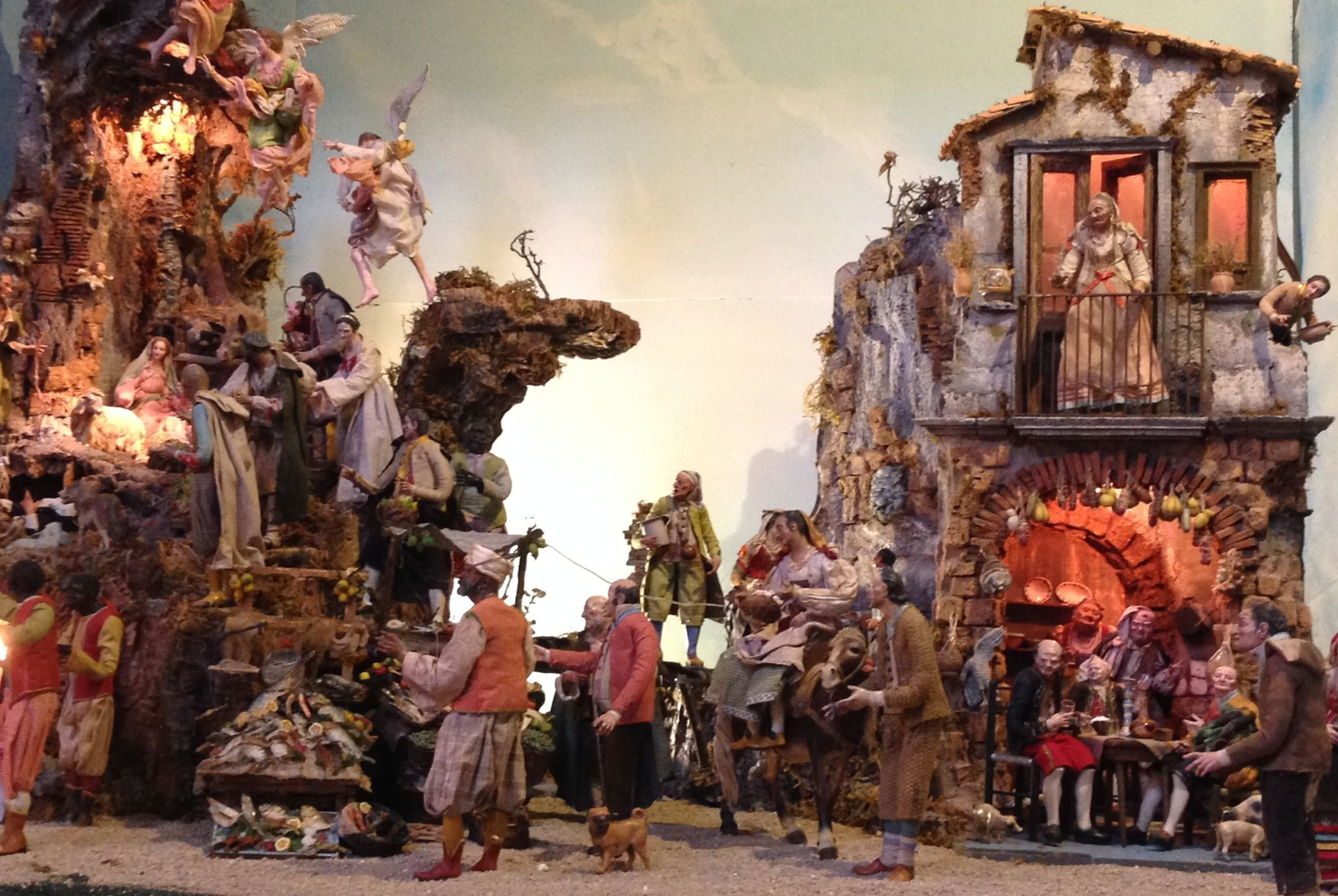
Within the rich landscape of Italian Christmas traditions, few evoke such immediacy and intimacy as the tradition of the Nativity scene. Behind the simple depiction of the Nativity the manger, the Infant Jesus, Mary, Joseph, the ox and the donkey lies a heritage of faith, art, devotion, and culture that has crossed centuries and geographical boundaries, becoming one of the most profound symbols of the Christian Christmas
Origins and early developments
The Nativity scene has its roots in the Gospel narrative, where the birth of Jesus in a manger is recounted in the Gospels of Luke and Matthew. It was not until 1223, however, in Greccio (Umbria), that Saint Francis of Assisi created the first living representation of the Nativity: a cave, hay, an ox and a donkey, driven by a strong desire to make the mystery of Christmas tangible for the faithful.
From this gesture arose a tradition that quickly spread first within churches, then in monasteries, in cities, and finally in the homes of believers. During the sixteenth century, the production of Nativity scenes became more systematic and closely linked to artisan workshops that crafted wooden or terracotta figurines for churches and oratories, contributing to the dissemination of the history of the Italian Nativity scene.
The Nativity scene as art and popular narrative
With the advent of the Baroque period and the expansion of the Italian states, the tradition of the Nativity scene took on increasingly complex forms. Its regional diffusion led to the emergence of different styles: in Northern Italy, more sober settings made of wood or terracotta prevailed, while in the Kingdom of Naples the Neapolitan Nativity scene assumed a new and profoundly “popular” character.
Alongside the sacred scene of the Nativity appeared figures from everyday life trades, animals, and richly detailed landscapes giving rise to lively and theatrical representations that united art, faith, and daily reality. This model established itself as an autonomous art form, leading to the development of specialized workshops and collections that helped transform the Nativity scene from a devotional object into a work of artisanal ingenuity.
Materials such as wood, stucco, and terracotta and in some cases copper and coral spread according to local contexts: wood predominated in the Venetian regions and in South Tyrol, while terracotta became dominant in Rome and Naples.
The role and legacy of the Jesuits
The Society of Jesus played a fundamental role in the dissemination of the Nativity scene and in its development as a pedagogical and formative tool. Together with the Franciscans and Dominicans, the Jesuits are credited with providing the decisive impetus that transformed the Nativity scene from a simple devotional device into a powerful means of visual and communal catechesis.
In Jesuit contexts, the Nativity scene became an integral part of formative life, conceived not merely as a representation but as a spiritual experience capable of inspiring reflection, conversion, and participation. In some churches belonging to the order, the Nativity scene was developed in relation to Ignatian spirituality, bringing together art, symbolism, and Christian life.
The Nativity scene today: a living tradition and cultural symbol
During the seventeenth and eighteenth centuries, the practice of the Nativity scene reached a high level of diffusion and complexity: movable scenes, increasingly realistic settings, and strong popular participation characterized the evolution of Nativity representations.
This phenomenon did not remain confined to Italy. The Italian model influenced Spain, France particularly Provence with its santons and other European cultures. In the modern era, the tradition of the Nativity scene takes many forms: urban installations, dedicated museums, specialized artisan workshops, living Nativity scenes, and contemporary reinterpretations that preserve the essential reference to the mystery of Christ’s birth.
The Nativity scene is far more than a decorative display: it is a tangible narrative of faith, a bridge between history, art, culture, and community. Across generations, it has been able to transform, adapt, and remain relevant, assuming deep and multifaceted meanings.
From Greccio to village streets, from Jesuit churches to Neapolitan workshops, the Nativity scene continues to invite contemplation. Through the manger in the cave and the Infant Jesus wrapped in swaddling clothes, it reveals the meeting of heaven and earth. In a world marked by noise and distraction, the Nativity scene remains a silent invitation to what is essential and to the wonder of the mystery of the Incarnation of God.
Share