Carlo Maria Martini: The “Cardinal of Dialogue”
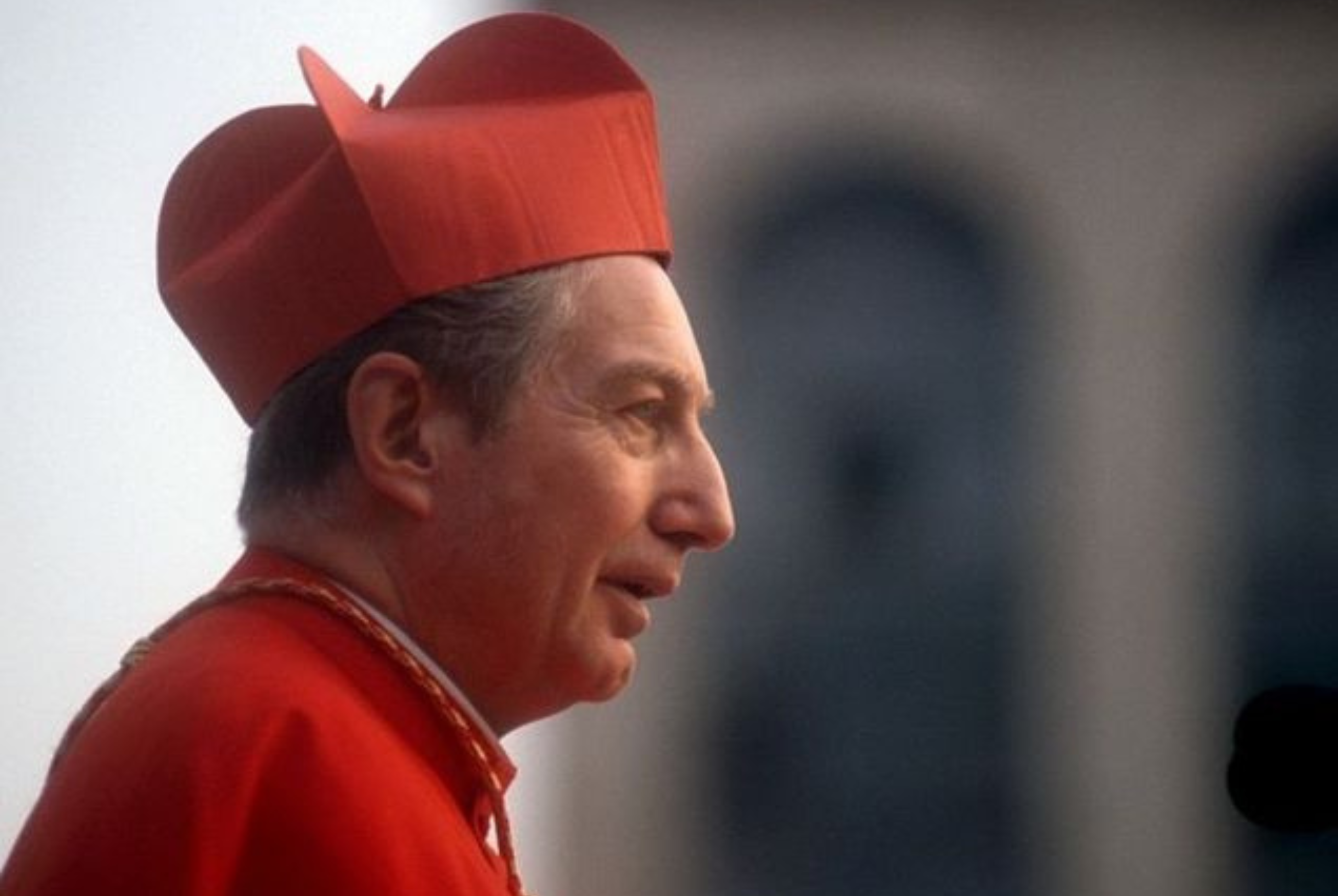
Theologian, Jesuit, and pastor
Carlo Maria Martini was born on 15 February 1927 in Orbassano, Piedmont. From an early age, he showed a strong inclination toward study and spirituality, combining faith and intellectual inquiry from his formative years. A Jesuit, biblical scholar, and theologian of international standing, he entered the Society of Jesus at just seventeen, beginning a journey that would lead him to become one of the most influential figures in contemporary Catholicism.
After completing his philosophical and theological formation, he was ordained a priest in 1952. He earned a doctorate in fundamental theology at the Pontifical Gregorian University and later a second doctorate at the Pontifical Biblical Institute with a thesis on the Codex Vaticanus, a masterpiece of textual criticism. His expertise soon established him as a leading international figure in biblical studies. In 1969 he became rector of the Pontifical Biblical Institute, and in 1978 he was appointed rector of the Gregorian University, contributing to the renewal of dialogue between faith and culture and to the formation of a generation of theologians and scholars.
For Martini, the Bible was not a text to be preserved but to be lived: a language that questions, guides, and transforms. His approach marked a turning point in twentieth-century theology, uniting scientific research with spiritual discernment according to the Ignatian charism of “seeking and finding God in all things,” a central element of Ignatian spirituality.
At the helm of the Ambrosian Church
On 29 December 1979, Pope John Paul II appointed him Archbishop of Milan. The choice, unexpected for a biblical scholar far removed from curial dynamics, signaled trust in a Church more capable of listening and dialogue. Martini formally took office on 10 February 1980 and immediately gave a new direction to the largest diocese in Europe.
In 1980 he established the School of the Word, monthly gatherings of lectio divina aimed especially at young people. The initiative, which filled Milan’s Cathedral, transformed the reading of Scripture into a communal experience and became a model for many dioceses in Italy and abroad. In 1987 he also founded the Chair of Non-Believers, engaging in dialogue with philosophers and intellectuals such as Massimo Cacciari and anticipating a structured method of dialogue between faith and reason on issues of ethics, freedom, and truth.
On 2 February 1983 he was created cardinal with the title of Santa Cecilia in Trastevere. From that moment on, Martini became a reference point not only for the Italian Church but also for the universal Church. He addressed issues of social justice, work, poverty, interreligious dialogue, and the role of the laity—topics that are now central to the Church’s pastoral mission.
His style was marked by wisdom and prophetic insight. He spoke with clarity without rigidity, convinced that faith must engage with reality. He promoted a Church “that listens,” less closed in on itself and more attentive to the questions of modern humanity. He met with young people, workers, students, believers and non-believers alike, using a language capable of reaching both mind and heart.
A universal vision
During his years of formation in the Society of Jesus, Carlo Maria Martini had expressed with conviction his desire to be sent on mission, preferably to Asia. His dream was to bring the Word of God to places where the Gospel was less known, in contexts where Christian proclamation could engage with ancient cultures and diverse religious traditions. This desire did not arise from idealism, but from a deep awareness of the universal value of faith and the need to build bridges between peoples, languages, and worldviews. Martini had dreamed of being a missionary in Asia, but the Church called him to a different mission: that of universal dialogue. Thus, although he never left for distant lands, he maintained a keen sensitivity to the international dimension of faith. He believed in a truly “universal” Catholic Church, one that does not impose models but learns from the cultures and people it encounters.
After resigning as archbishop in 2002, he moved to Jerusalem, a city symbolic of faith and of the world’s complexity. There, in the Jesuit residence at the Pontifical Biblical Institute, he spent long periods devoted to prayer and the study of sacred texts. He took part in ecumenical and interreligious encounters, convinced that peace can only arise from mutual listening and respect.
Jerusalem also became for Martini a laboratory of peace. Encounters with rabbis, imams, Christian theologians, and scholars from around the world allowed him to nurture the dream of a possible coexistence among faiths. His commitment was discreet but constant: he avoided media gestures, preferring the depth of authentic dialogue and the strength of prayer. He often said that peace is born first and foremost “in a heart that knows how to listen and forgive,” a conviction that permeated his final years.
Final years and legacy
Over time, Jerusalem became for him not only a place of residence but a true vocation: a space where faith could be lived in its universal dimension, beyond divisions and conflicts. He continued to participate in ecumenical and interreligious meetings and to maintain relationships of dialogue with rabbis, imams, and scholars from around the world, faithful to the belief that peace always begins with attentive listening. His witness, discreet yet constant, became a message of hope and reconciliation, lived more through prayer than through public speech.
Stricken by Parkinson’s disease, however, he was forced to limit his activities. He accepted illness with serenity, transforming it into an opportunity for contemplation and witness. He returned to Italy, to the Jesuit residence in Gallarate, where he died on 31 August 2012. His funeral in Milan Cathedral, presided over by Cardinal Angelo Scola, was attended by thousands of people from around the world, a tangible sign of his spiritual and human legacy.
Today, his spiritual and intellectual legacy is preserved and promoted by the Carlo Maria Martini Foundation, established to safeguard and disseminate his thought. Its archives contain a vast body of writings—pastoral letters, homilies, meditations, biblical essays, and public interventions—that testify to the breadth of his reflection and the coherence of his journey. Through the Foundation, Martini continues to engage in dialogue with those who seek in faith a space of freedom and intelligence, inspiring new generations of believers and scholars.
In an age of rapid transformation, Martini remains a point of reference for his ability to unite intelligence and compassion, word and silence, rootedness in tradition and openness to the future, in the spirit of Ignatian spirituality and of dialogue between faith and culture.
Share