San Gregory the Great: humble pope and Shepherd of the Church
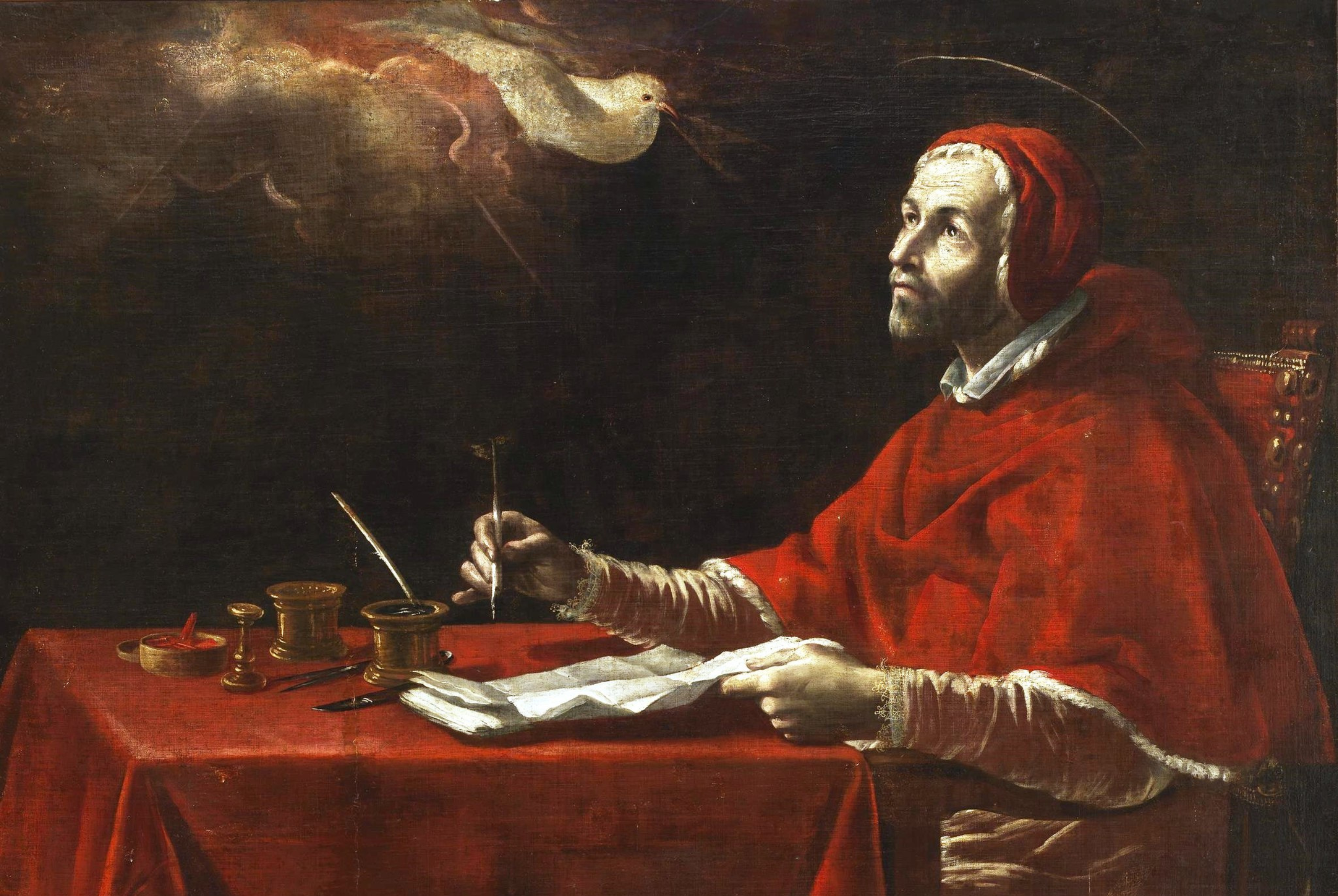
A wise pastor and tireless reformer, Saint Gregory the Great was acclaimed and recognized by the Christian people for his liturgical renewal and charitable care for the most needy. Remembered on September 3rd, the date of the beginning of his pontificate in 590, Gregory lived as the “servant of the servants of God” and was named one of the four great Doctors of the Church alongside Saint Ambrose, Saint Augustine of Hippo, and Saint Jerome.
Education between politics and religion
Gregory was born in Rome around 540, into the aristocratic family of the Gens Anicia. Raised in a cultured environment, he first held important administrative positions such as Prefect of Rome. After his father’s death, Gregory chose to leave his political career to embrace monastic life, converting the family home into a monastery dedicated to Saint Andrew. In 590, during a terrible plague, he was elected pope with the name Gregory I. It was the beginning of a pontificate that would deeply shape the history of the Church.
The pontificate and social commitment
In a Rome plagued by disease, famine, and barbarian invasions, Gregory I called the faithful to a solemn penitential procession to the Basilica of Saint Mary Major, to invoke God’s help against such afflictions.
Throughout his pontificate, he showed special concern for the poor, managing the Church’s goods to serve others. He distributed harvests from Church estates to the needy, visited the sick, and promoted hospitality for pilgrims and orphans. His actions strengthened the Church’s moral and spiritual authority during a time of great uncertainty.
Ecclesiastical reforms and writings
In liturgy, Gregory promoted the ordering of rites and sacred chants, which later became known as Gregorian chant. On the pastoral level, he authored the Pastoral Rule, which outlined the bishop as a spiritual guide close to the people, combining authority with service. Administratively, he reformed the management of the Patrimonia Ecclesiae (Church properties), making them efficient tools for charity and stability.
Gregory was not a speculative theologian but a master of Christian life. His major works include the Pastoral Rule, a vast commentary on the Book of Job (35 volumes), the Dialogues (a collection of saints’ lives and miracles), and over 800 letters that provide valuable insight into the Church and society of his time.
The great works of evangelization
Gregory the Great is also remembered for his missionary efforts: he promoted the conversion of the Lombards and extended evangelization to the Anglo-Saxon territories. In Britain, he laid the foundations of the English Church by sending Augustine, prior of the Monastery on the Caelian Hill, who later became the first Archbishop of Canterbury.
A lasting and priceless legacy
Gregory died in Rome on March 12th, 604, after fourteen years of devoted leadership. He guided the Church through instability and crisis, leaving a legacy measured not only by reforms but also by his pastoral style – close to the people, uniting spirituality, charity, and universal vision. Immediately venerated as a saint, he remains one of the most influential popes in history.
Share